Special Session Two
- Home
- Special Session
- Special Session Two
Session Title: Power Systems for Emerging Energy Technologies and Net-Zero Transition
Power systems worldwide are undergoing significant transformation, driven by the urgent need to reduce carbon emissions and the retirement of coal-fired power plants reaching the end of their technical or economic life. At the same time, substantial cost reductions have accelerated the deployment of renewable energy technologies, including utility-scale wind and solar farms, as well as distributed rooftop photovoltaic systems. In addition, the transition toward net zero is fostering the development of emerging energy technologies such as hydrogen energy and electric vehicles.
These developments present both opportunities and challenges for modern power systems. On the one hand, they support decarbonization, enhance renewable energy integration and energy sharing, and promote the electrification of transport and industry. On the other hand, their large-scale deployment introduces significant challenges for system planning, operation, flexibility, resilience, and security. Addressing these challenges requires not only technological innovation but also new approaches to system operation, market design, and policy support. It further calls for closer collaboration among researchers, industry practitioners, and policymakers to enable the transition toward cleaner and more reliable energy systems.
This special session aims to foster a professional network connecting researchers, academics, industry professionals, engineers, and domain experts, while providing a platform to share the latest advancements in power systems driven by emerging energy technologies and the net-zero transition. Contributions are welcome on topics including, but not limited to, hydrogen energy, energy storage technologies, electric vehicles, distributed energy resources, coordinated energy and computing infrastructures, renewable energy integration, low-carbon energy system planning, system resilience under extreme events, and transportation electrification. Both theoretical studies and practical case studies are encouraged to support the development of sustainable, resilient, and low-carbon energy systems.
Special Session Chairs
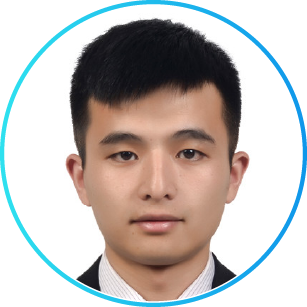
Jiajia Yang
James Cook University, Australia
Jiajia Yang (Senior Member, IEEE) received the B.E. degree in electrical engineering from Northeast Electric Power University, China, in 2011, the M.E. degree in electrical engineering from Zhejiang University, China, in 2014, and the Ph.D. degree from the University of New South Wales, Australia, in 2018. He is currently an Associate Professor of Renewable Energy and Electrical Engineering at James Cook University, Australia. His research interests include power system modeling and operation, renewable energy integration, and electricity markets.

Zehua Zhao
James Cook University, Australia
Yuchen Zhang (Member, IEEE) received the B.E., B.Com., and Ph.D. degrees from the University of NewSouth Wales, Sydney, NSW, Australia, in 2013, 2013, and 2018, respectively. He is currently a Lecturer and an ARC Discovery Early Career Researcher Award Fellow with the School of Electrical Engineering and Robotics, Queensland University of Technology, Brisbane, QLD, Australia. He was a Research Associate with the ARC Research Hub for Integrated Energy Storage Systems, University of New South Wales, Sydney, NSW, Australia. His research interests include power system stability assessment and control, wind farm planning, condition monitoring, smart campus, and data-driven applications in power systems.

Hui Hou
Wuhan University of Technology, China
Hui Hou (Senior Member, IEEE) received the B.S. degree from Wuhan University, China, in 2003, and the Ph.D. degree from Huazhong University of Science and Technology, China, in 2009. She is currently a Professor with the School of Automation, Wuhan University of Technology, where she also serves as the Head of the Department of Electrical Engineering. Her research interests include power system risk assessment, protection, and security control.

Li Sun
Southeast University, China
Li Sun (Senior Member, IEEE) received the bachelor’s degree from Southeast University, Nanjing, China, in 2012, and the Ph.D. degree from Tsinghua University, Beijing, China, in 2017. He is currently a Youth Chair Professor with the School of Energy and Environment, Southeast University. His research focuses on AI applications in energy systems, energy storage technologies, and battery energy management.